
Can a wallet protect a DeFi user from a bad trade, a misleading approval, or a sandwich attack simply by showing more information before the transaction is signed? The answer is neither an uncomplicated yes nor a dismissal. In Ethereum and other EVM networks, safety depends on several layers: what the user intends, what the transaction actually does, how it is routed, and what happens between signing and inclusion in a block. A wallet such as rabby wallet is valuable because it brings some of those layers into one decision surface. But portfolio tracking and MEV protection address different problems, and confusing them creates a dangerous sense of security.
The useful mental model is not “the wallet makes DeFi safe.” It is “the wallet reduces uncertainty before the user commits.” That distinction matters for US-based users managing multiple chains, volatile token balances, staking positions, liquidity positions, and unfamiliar protocols. A clear portfolio view can reveal exposure; transaction simulation can reveal likely state changes; security warnings can flag suspicious patterns. None of these tools eliminates smart-contract risk, oracle failure, liquidity shocks, or the incentives of block builders.
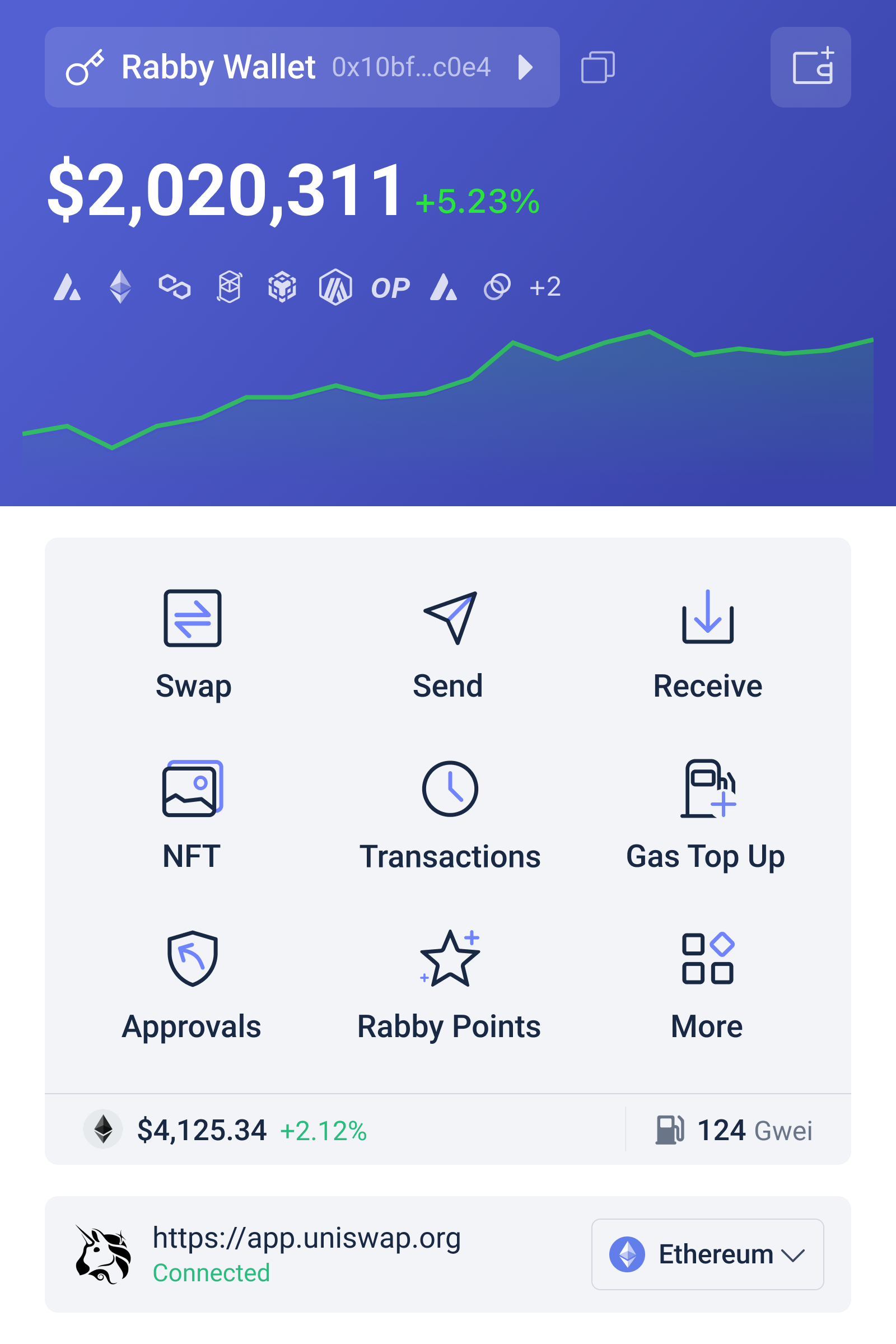
Myth One: Portfolio Tracking Is Just a Balance Sheet
A basic wallet balance answers a narrow question: how many units of an asset are associated with an address? DeFi portfolio tracking must answer a broader one: what economic exposure does the address have, across contracts, chains, and positions? A user may hold a governance token directly, deposit another token into a lending market, provide liquidity in a pool, or own a receipt token representing a claim on an underlying position. These are not equivalent exposures even if a dashboard displays them in a single dollar total.
This is why portfolio tracking is more than a convenience feature. It is an interpretation problem. The wallet has to identify assets and contract positions, associate them with networks, and estimate their value using available market information. A total portfolio number can help with allocation and risk awareness, but it is not a guaranteed liquidation value. Thin liquidity, stale pricing, price-impact costs, debt obligations, and withdrawal restrictions can all make the displayed figure optimistic.
The non-obvious risk is aggregation error. A diversified-looking portfolio may still be concentrated in one bridge, one stablecoin design, one oracle dependency, or one lending protocol. Conversely, several token symbols may represent claims on the same underlying collateral. A useful dashboard should therefore be read in layers: total value first, then chain distribution, protocol exposure, asset type, and liabilities. The practical question is not merely “How much do I own?” but “What must continue working for this reported value to remain accessible?”
Transaction Simulation Turns Intent Into a Testable Question
Signing a transaction is often presented as an act of authorization, but the wallet is authorizing a set of state changes encoded in contract calls. A swap may transfer one token, approve a spender, invoke a router, and deliver another token subject to execution conditions. A liquidity transaction may alter pool shares. A simple-looking claim can trigger several internal transfers. Simulation attempts to execute that proposed call against an available representation of chain state and then reports expected outcomes.
This changes the user’s question from “Does this website look familiar?” to “What is this transaction expected to do?” That is a substantial improvement. A simulation may expose the tokens leaving an address, the assets expected in return, a changed allowance, or a failure caused by slippage and contract conditions. For an educated non-specialist, this translation is often more useful than raw hexadecimal calldata.
Yet simulation is not a proof of safety. It is conditional on the simulated state, the selected RPC or node infrastructure, the transaction parameters, and the assumption that the relevant contracts behave as represented. State can change before inclusion. A token can contain transfer restrictions or malicious logic that is difficult to summarize. A contract can be exploitable even when a normal call produces the expected result. Simulation is best understood as a pre-flight check, not a formal audit.
This limitation becomes especially important during volatile markets. If a swap is simulated at one block state but executes after reserves have moved, the expected output may differ. Slippage limits reduce one class of execution risk, but setting them too tightly can cause failure; setting them too loosely can permit an unfavorable fill. The wallet can make the trade-off visible, but the user still decides how much uncertainty to accept.
MEV Protection Is About the Transaction’s Path
Maximum extractable value, or MEV, refers broadly to value captured by actors who can influence transaction ordering, inclusion, or execution around pending transactions. In a decentralized exchange, the familiar example is a sandwich: a searcher places one trade before a user’s swap and another after it, using the user’s price impact as part of the strategy. Other forms of MEV include arbitrage, liquidations, and ordering advantages that are not necessarily malicious but can still affect users.
The key distinction is between transaction correctness and transaction privacy. A simulation can indicate that a swap is likely to succeed and return an estimated amount. It does not automatically hide the transaction’s intent from observers who can see a public mempool or infer activity from other signals. MEV protection generally requires changing how the transaction is propagated or ordered, such as using private submission paths, specialized routing, tighter execution constraints, or protocols designed to reduce exploitable information.
Wallet-level MEV features may help by warning about vulnerable trades, supporting safer transaction routes, or directing eligible transactions away from openly observable pending pools. Their effectiveness depends on network support, the route used, the transaction type, and whether the protection path itself introduces additional assumptions. Private submission can reduce exposure to certain public-mempool strategies, but it cannot guarantee favorable execution, prevent every form of arbitrage, or remove smart-contract risk.
There is also a trade-off between privacy and inclusion. A private route may fail, delay a transaction, or depend on a particular infrastructure provider. A public transaction may be more broadly available to validators and builders but easier for searchers to observe. The correct choice depends on urgency, trade size, liquidity, and the cost of failure. For a small, deep-liquidity swap, the incremental benefit may be limited; for a large trade in a shallow pool, execution path can matter considerably.
How Portfolio Tracking and MEV Protection Work Together
These features are complementary rather than interchangeable. Portfolio tracking provides context before action: concentration, chain exposure, token balances, debt, and protocol positions. Simulation examines the proposed action: what leaves, what arrives, and which permissions change. MEV-aware execution considers the route from signed transaction to confirmed state. A robust workflow uses all three questions in sequence.
- Context: What exposure does this position create, and how large is it relative to the rest of the portfolio?
- Intent: Does the simulated result match the action the user believes they are taking?
- Execution: Could public visibility, price impact, ordering, or latency materially change the result?
- Recovery: If the transaction fails or a contract behaves unexpectedly, can approvals be revoked and positions unwound?
This framework is more reliable than treating a security score or warning banner as a final verdict. Security indicators are signals, not substitutes for judgment. A familiar protocol can be compromised, and an unfamiliar contract can be legitimate but poorly labeled. The strongest practical habit is to compare the transaction’s economic meaning with the user’s intended outcome, especially when signing approvals, permit messages, callbacks, or transactions that interact with several contracts.
What the Recent Rabby Positioning Suggests
Recent project messaging presents Rabby Wallet as a wallet for Ethereum and EVM networks, emphasizing broad chain support, on-chain activity, and access through browser extensions such as Chrome and Brave. That positioning matters because fragmented DeFi activity is itself a risk factor. Moving among networks and applications can make it harder to remember allowances, bridge dependencies, and dormant positions.
However, broad EVM coverage also increases the need for disciplined review. Different chains can have different liquidity conditions, bridge assumptions, fee markets, and levels of application maturity. A unified interface can improve visibility, but it should not make separate networks appear economically identical. Users should still verify the network, contract address, token denomination, and expected result before approving a transaction.
Looking ahead, the useful signal to watch is not simply whether wallets add more warnings. It is whether they improve the connection between portfolio state, transaction simulation, and execution policy. Conditional transaction controls—such as user-defined limits on approvals, value transfers, or slippage—could make wallet security more operational rather than merely informational. Their usefulness would depend on accurate state interpretation and clear handling of exceptions, so this remains an area where interface design and infrastructure reliability matter as much as feature lists.
FAQ
Does portfolio tracking show the exact amount I could withdraw?
Not necessarily. A displayed value may rely on market prices and estimated positions, while the realizable amount depends on liquidity, price impact, debt, withdrawal rules, and contract availability. Treat the figure as an estimate of exposure, then inspect the underlying position and exit conditions.
Can transaction simulation prevent a sandwich attack?
No. Simulation can reveal expected outcomes and may flag unfavorable execution conditions, but it does not by itself hide a pending transaction or control its ordering. MEV reduction requires an appropriate execution path and remains dependent on network and infrastructure conditions.
What should I check before signing a DeFi transaction?
Confirm the network, target application, assets leaving and arriving, approval amount, slippage setting, recipient address, and whether the action creates a lasting permission. For a large or unusual transaction, compare the simulation with the protocol’s stated purpose and consider testing with a smaller amount first.
The most accurate way to assess an advanced wallet is therefore not to ask whether it guarantees safety. Ask whether it improves the quality of decisions made before an irreversible state change. Portfolio tracking helps expose hidden concentration, simulation translates contract calls into expected consequences, and MEV-aware execution can reduce certain ordering risks. Their value is real, but bounded. The user’s edge comes from understanding those boundaries—and treating every transaction as an economic action, not merely a button press.